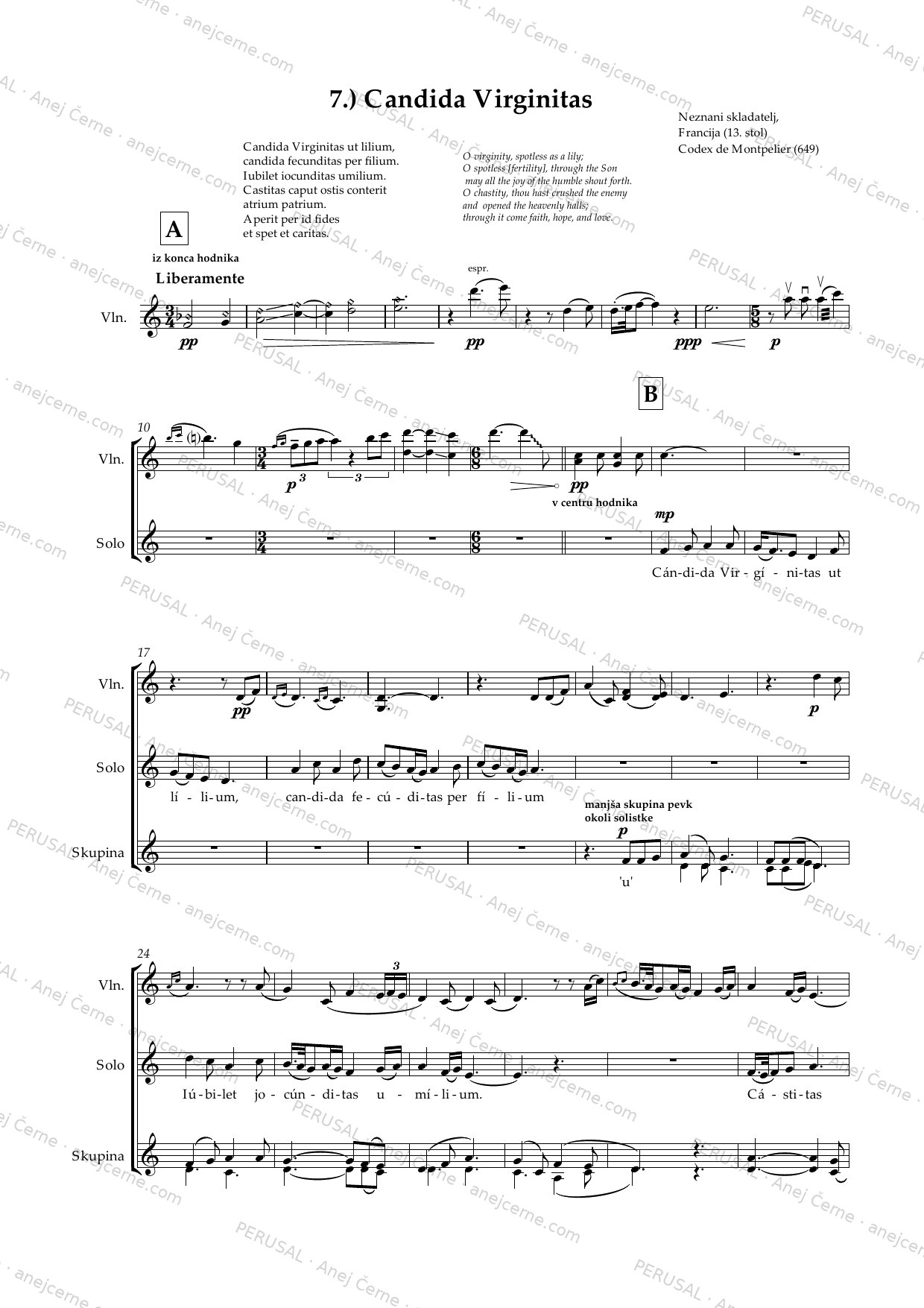
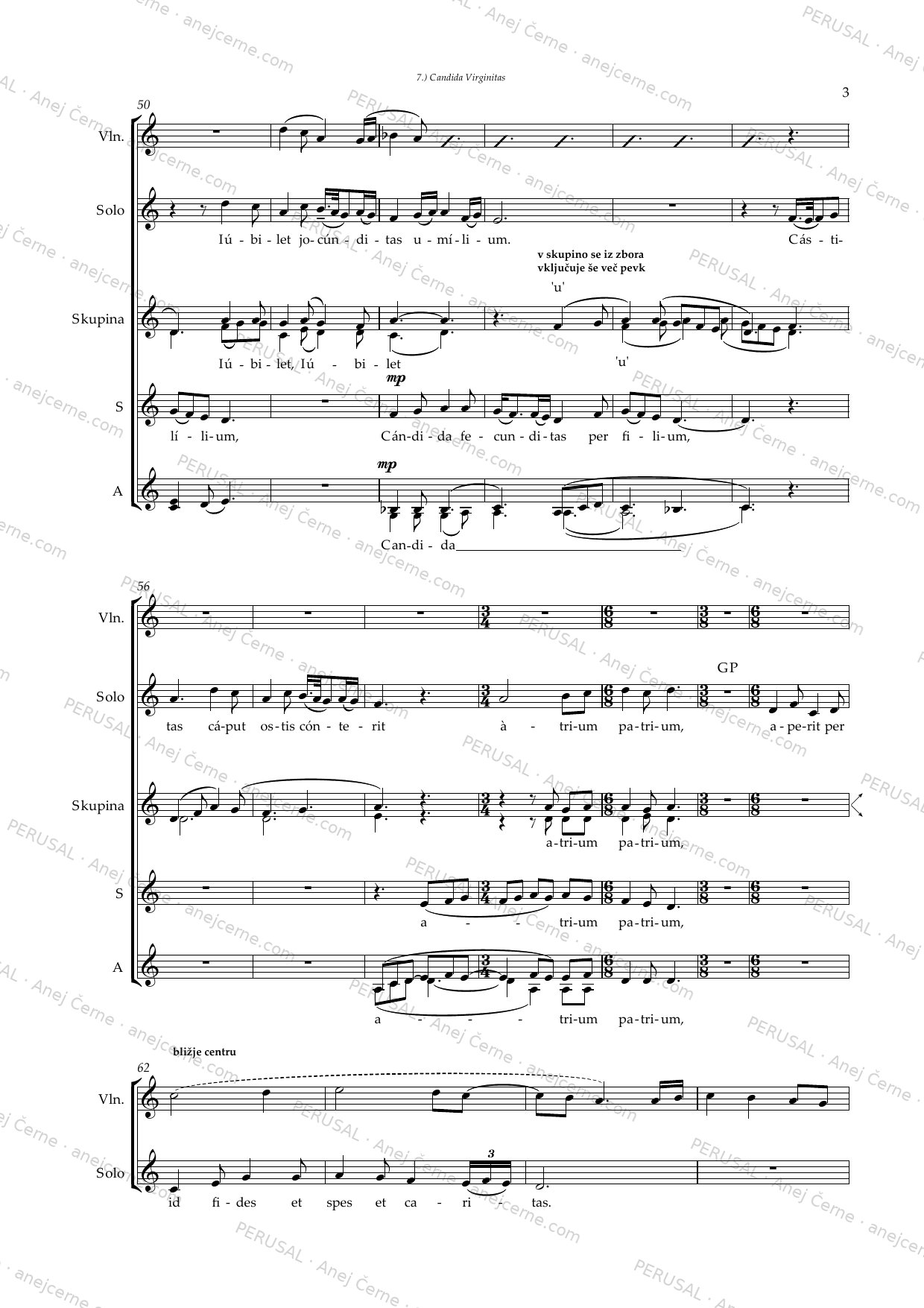
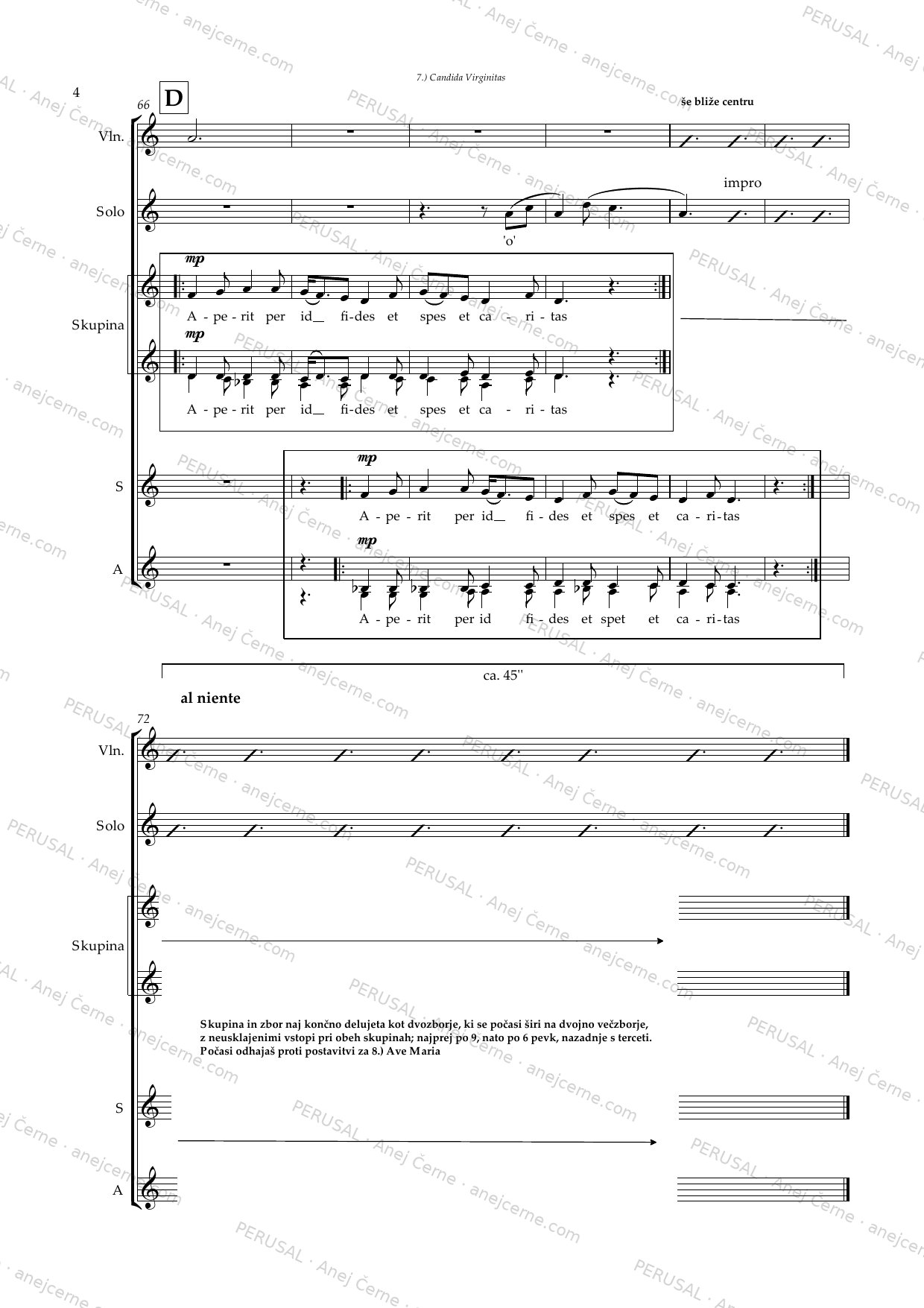
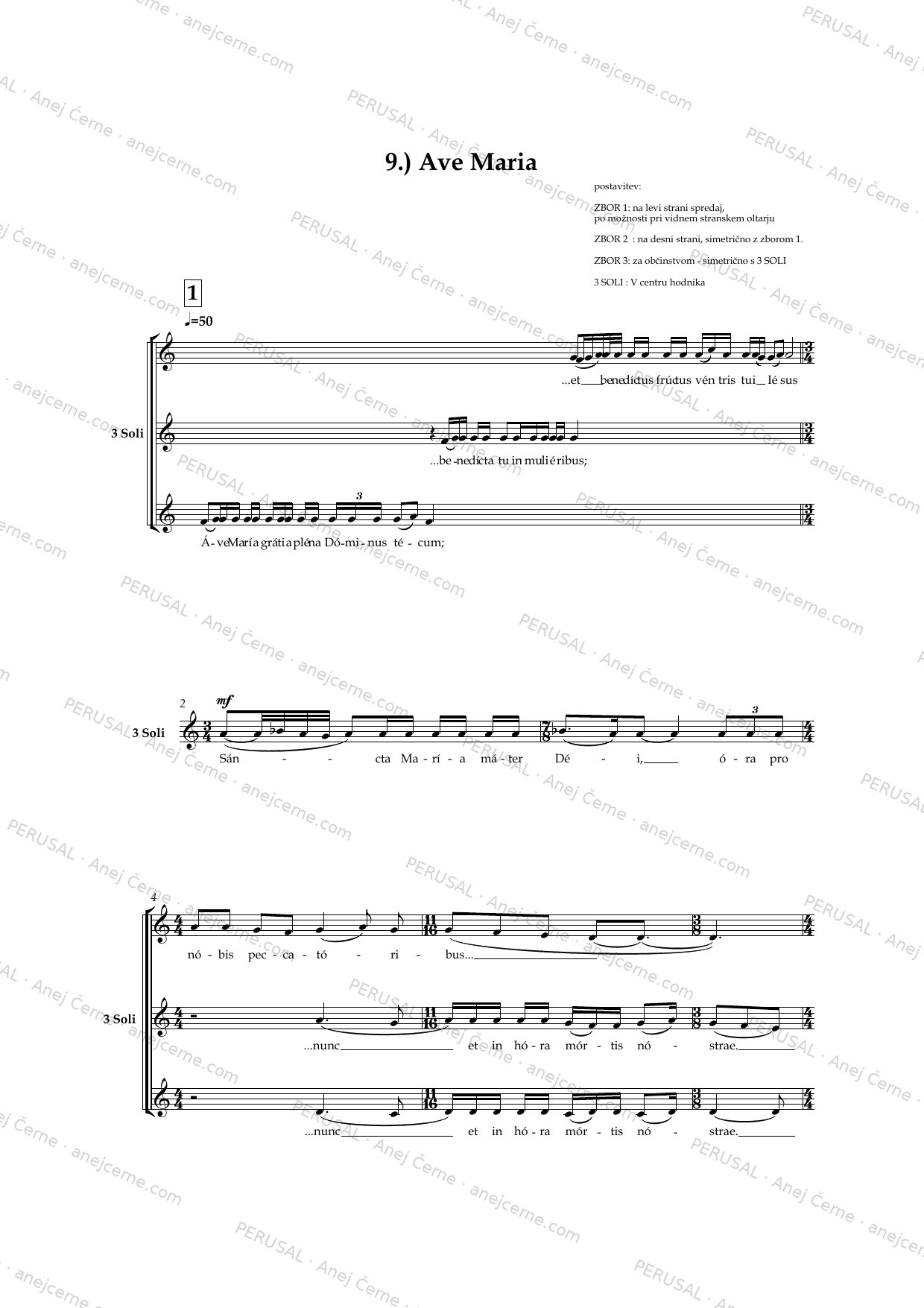
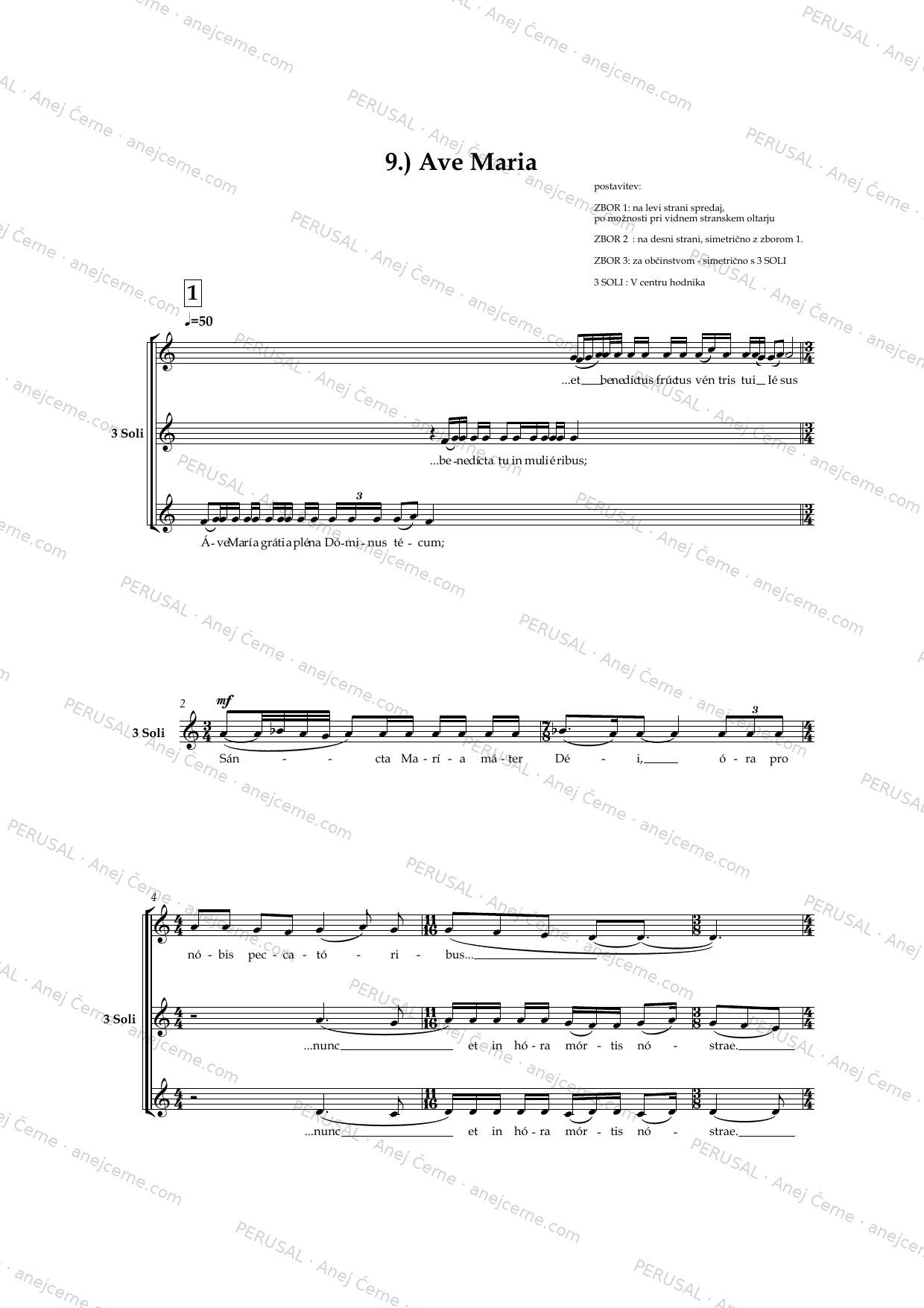
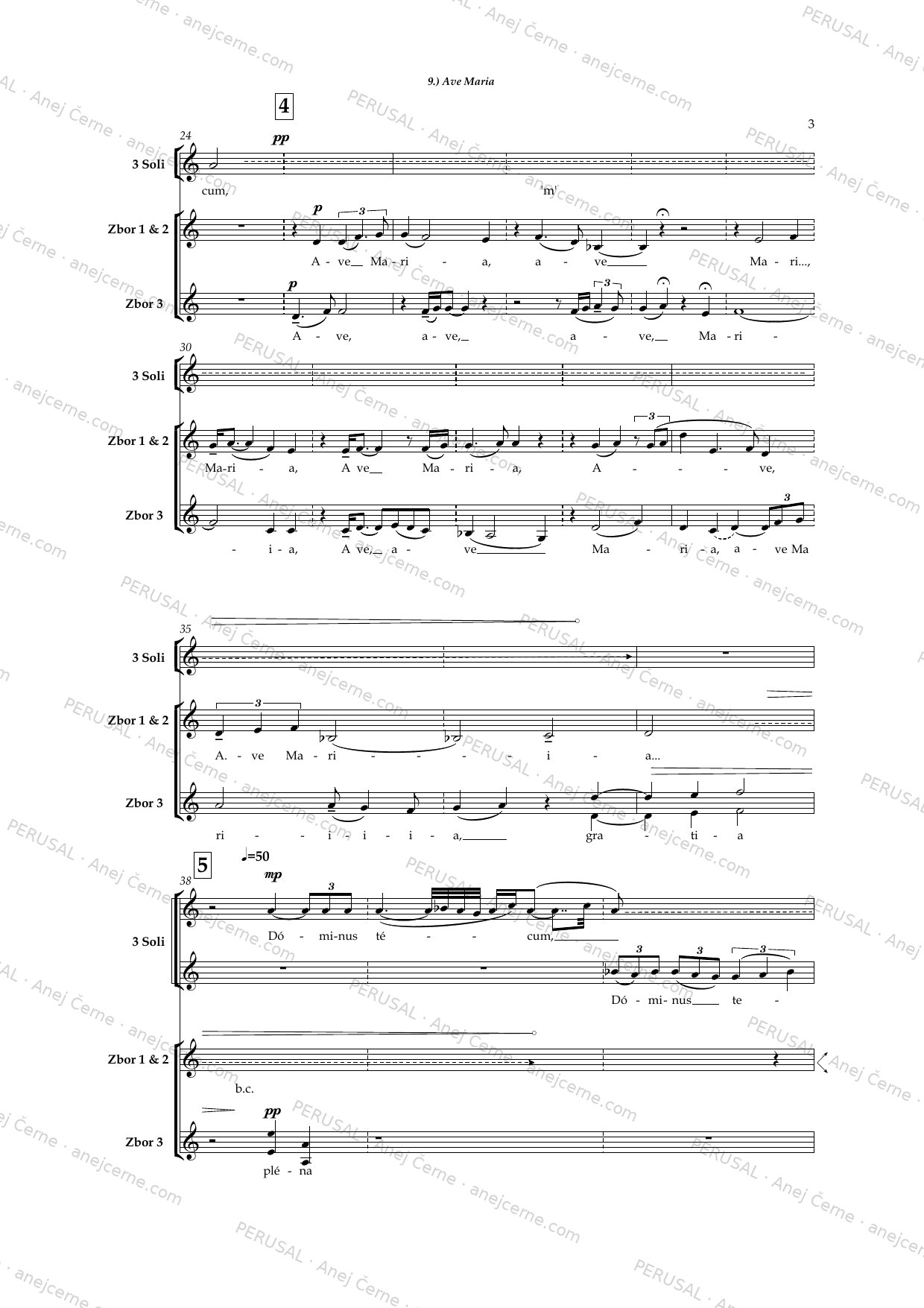
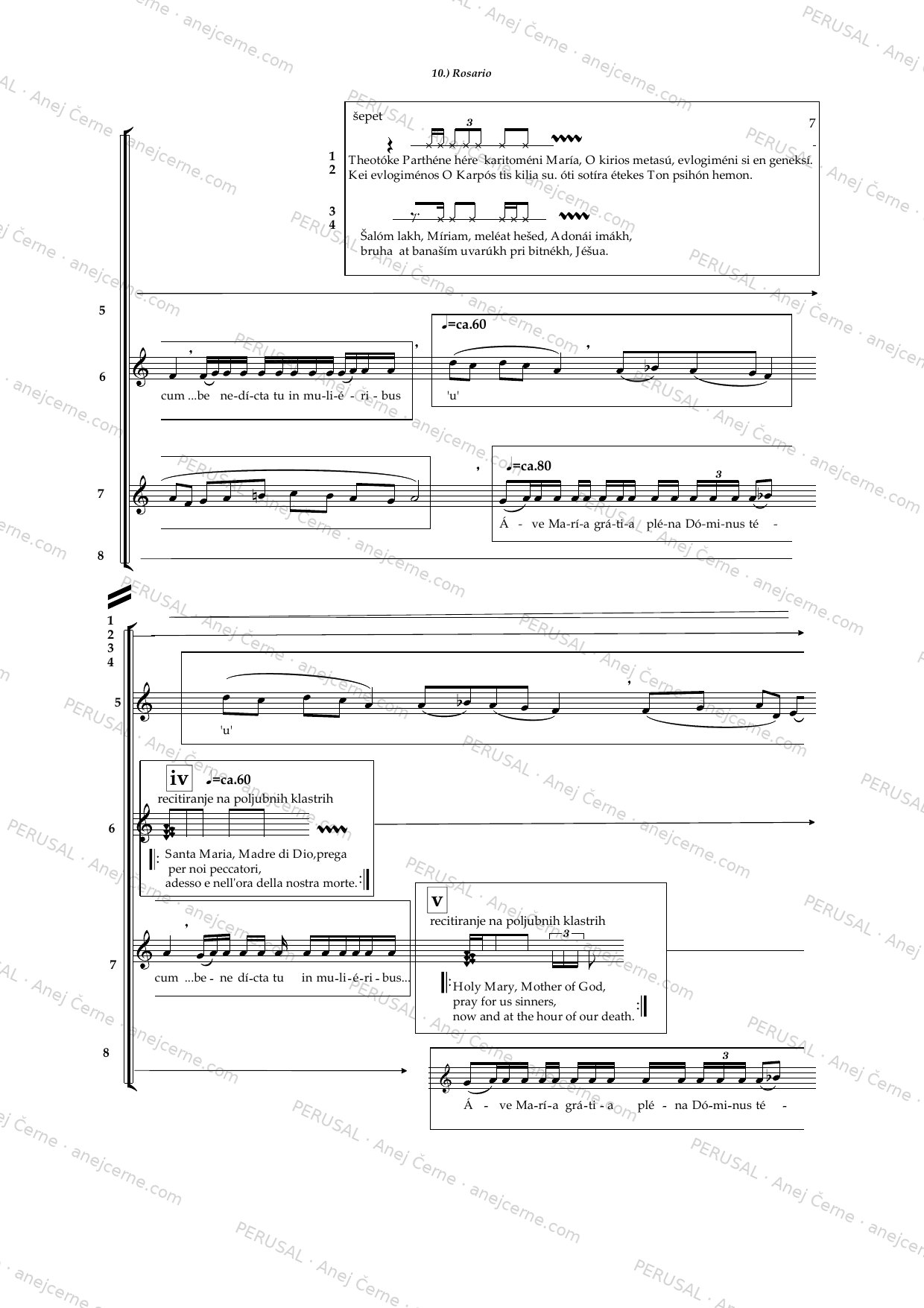
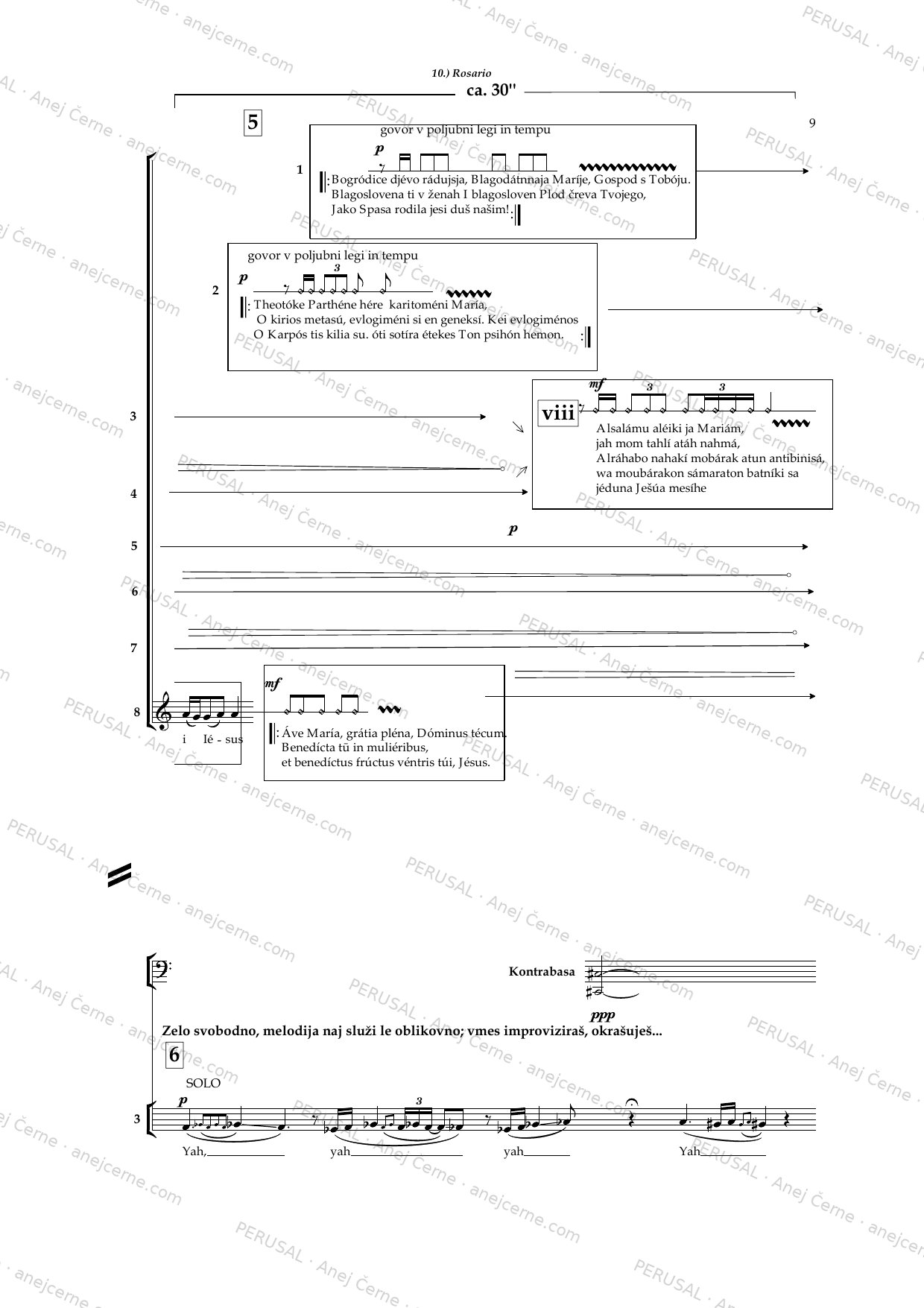
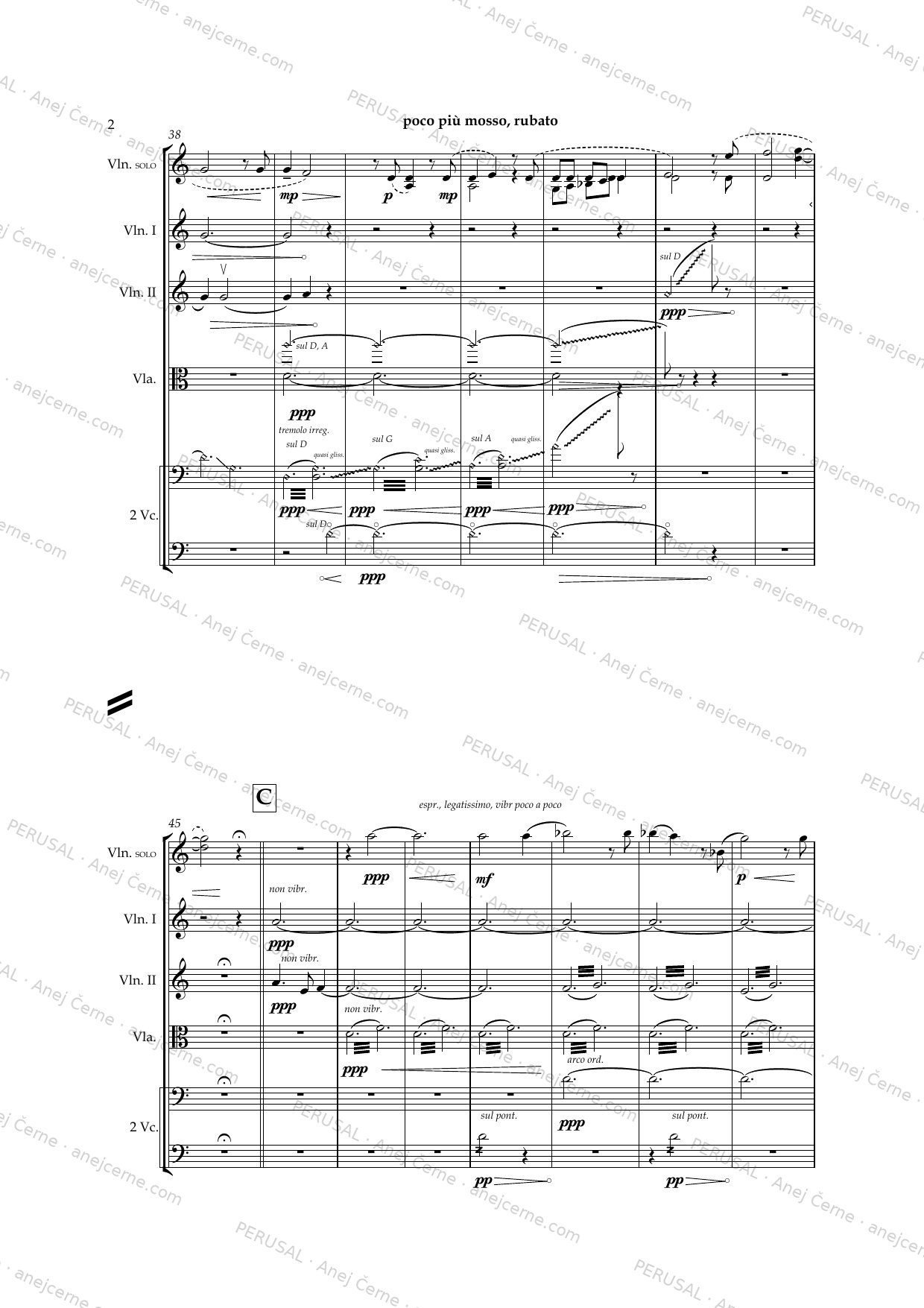
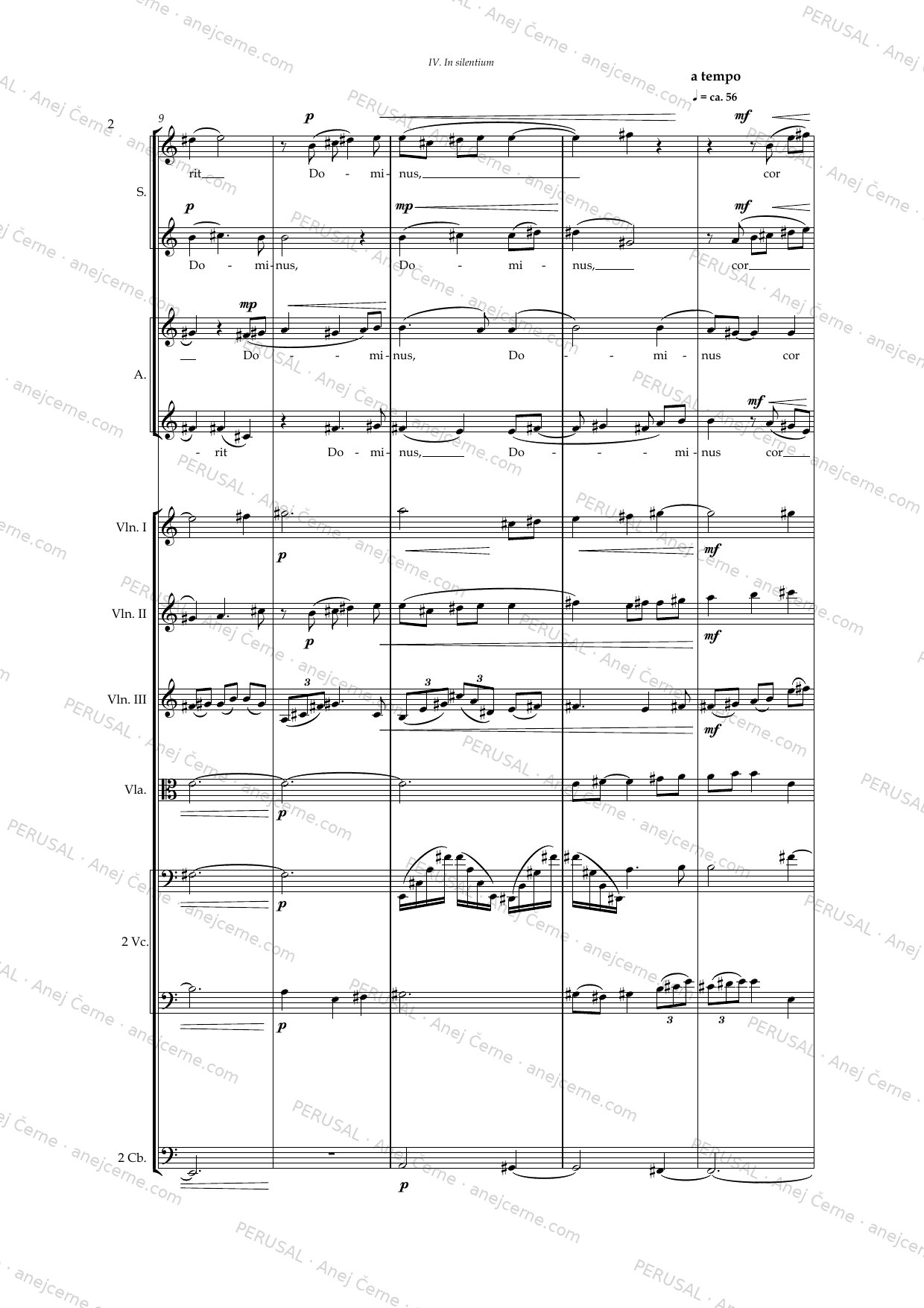
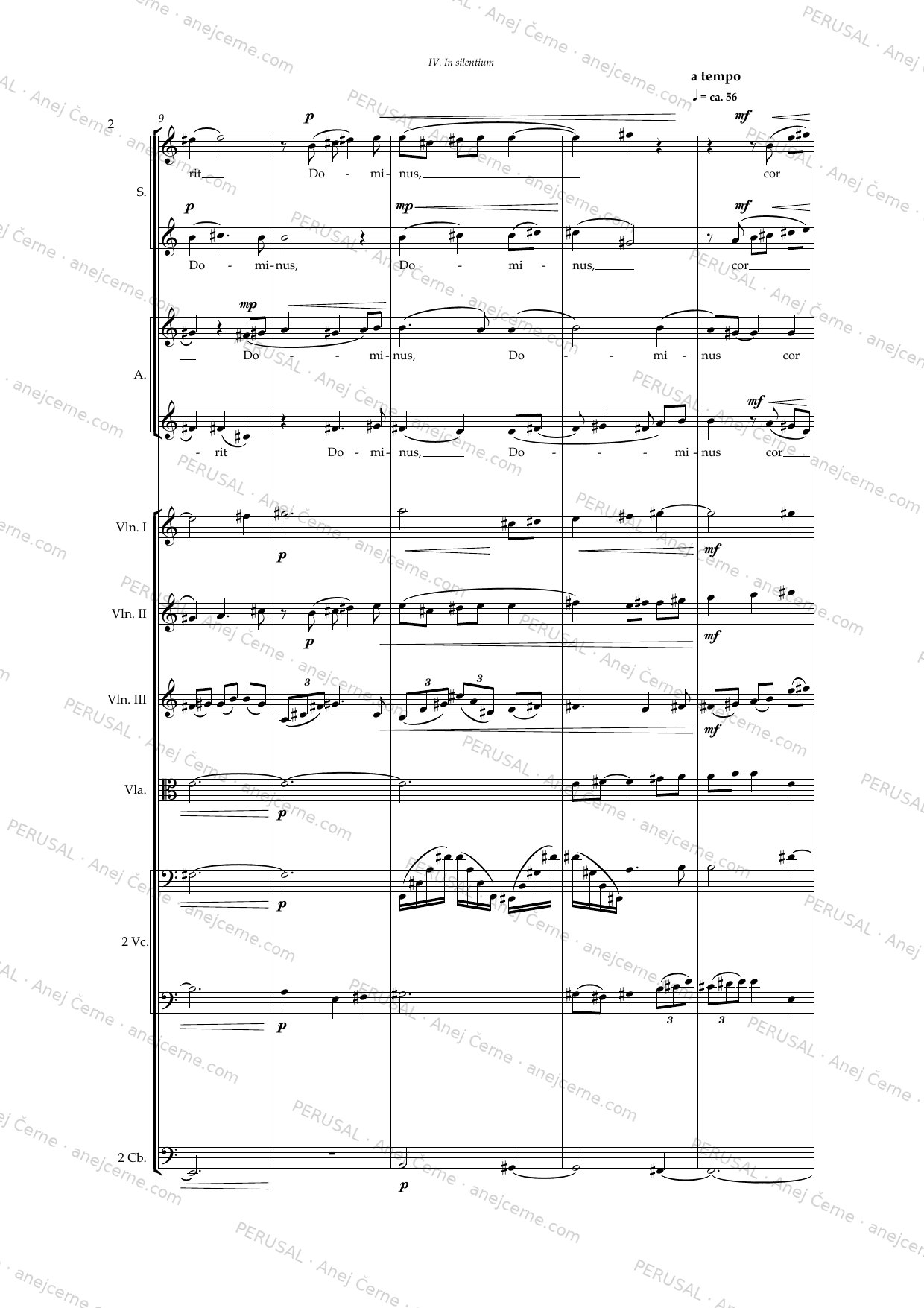
Circum tempus — Around Time — is a work of art which questions the sense of our existence and of time itself. The answer to such universal questions is always torn between two extremities: doubt and absoluteness. What is the truth? Do we have a truth of our own, and if so, whose truth is the absolute one? Who is to judge? Throughout history, such questions have led to answers that have changed with time, intertwining as clusters of beliefs that guide us along our life paths.
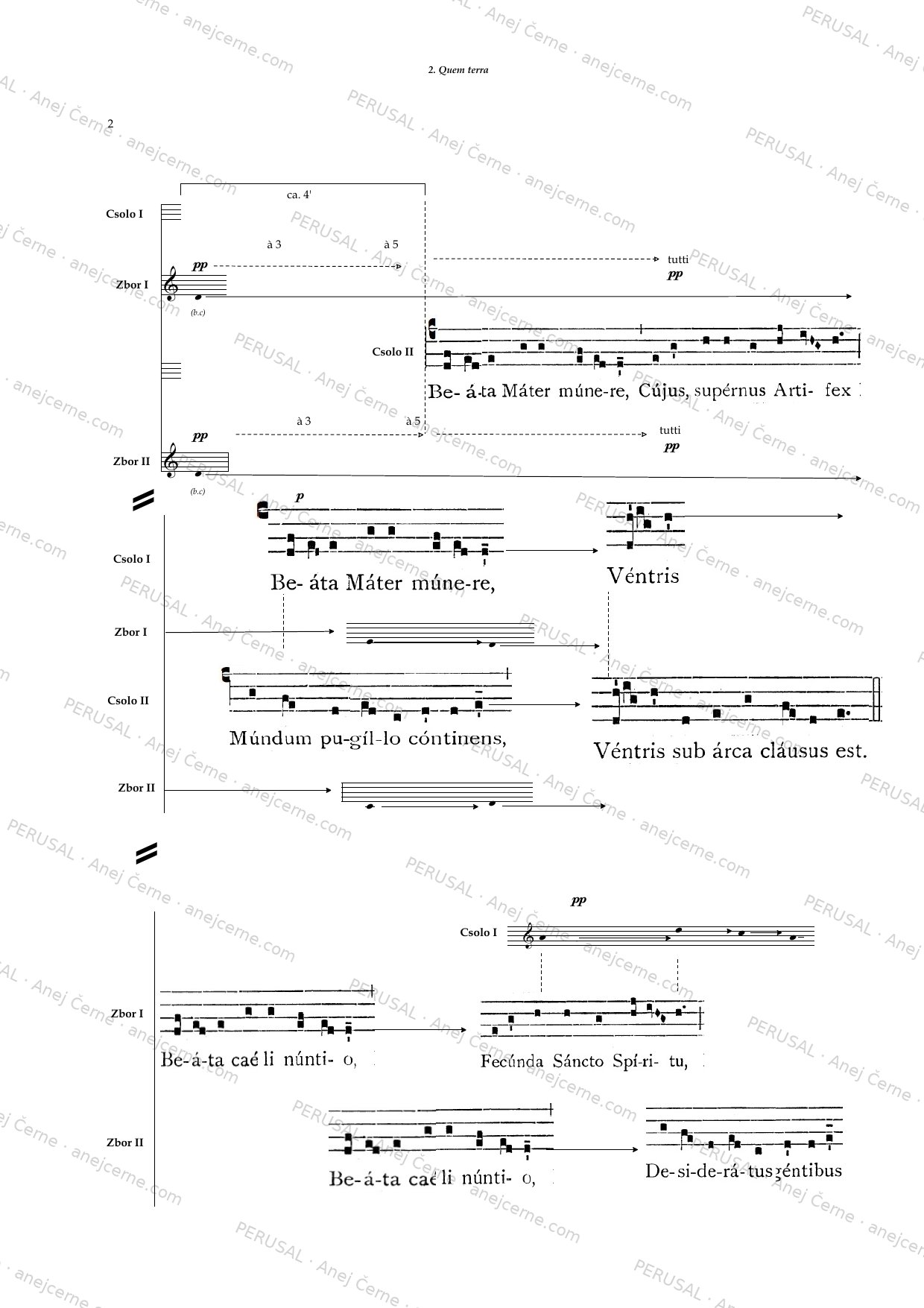
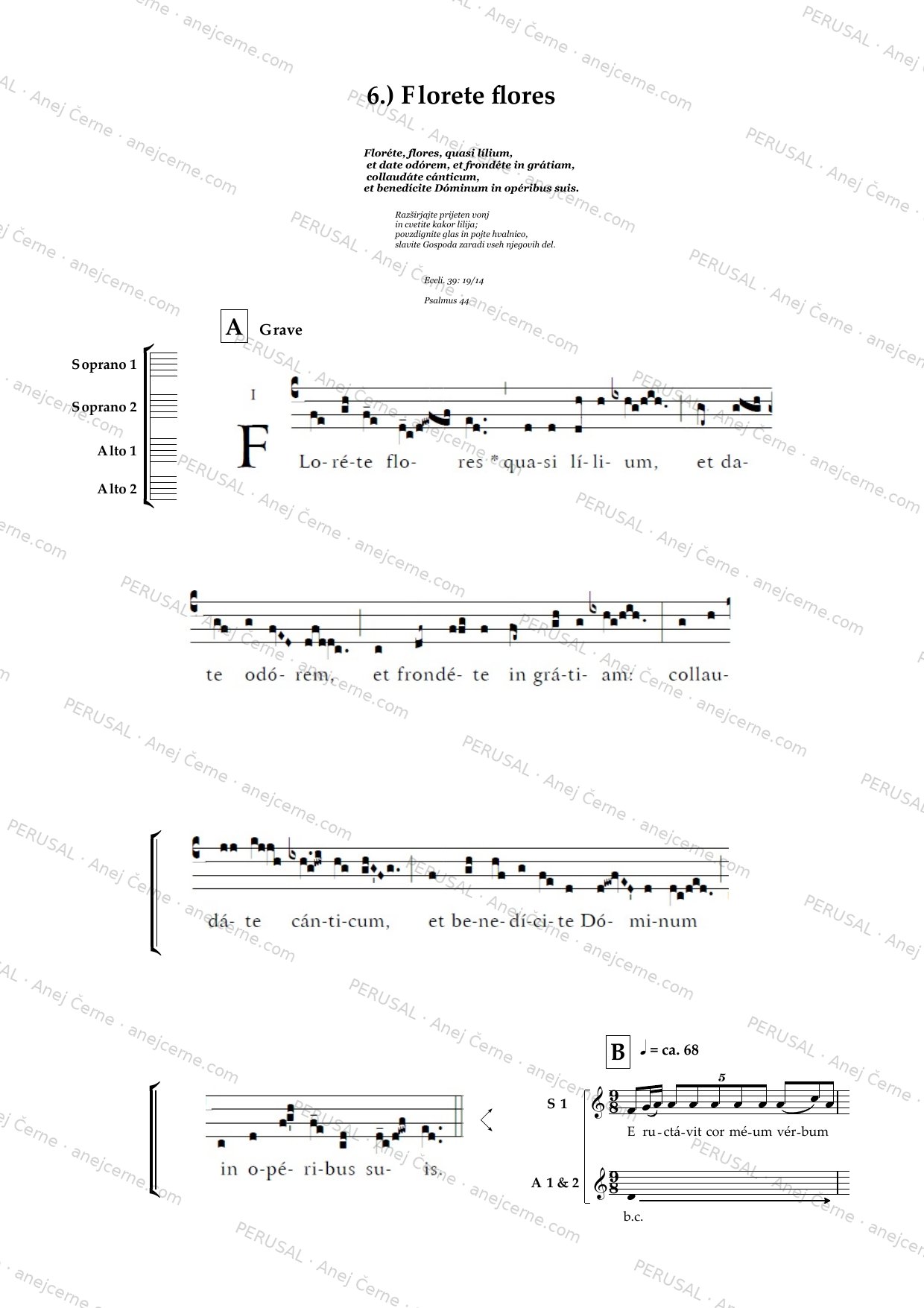
The most intimate of instruments is the human voice, and singing together is an expression of symbiosis among different people. We all know the same emotions, but each of us perceives them differently — and yet we all want the same thing: to find a path towards light and peace. If we want to be heard, we must first learn to listen. The interlacement of song, word and silence, in space and time dedicated to it, becomes a mystical mindful trip into ourselves by surpassing our ego in synergy with others. This is also the foundation of the oldest preserved musical form — the Gregorian chant.
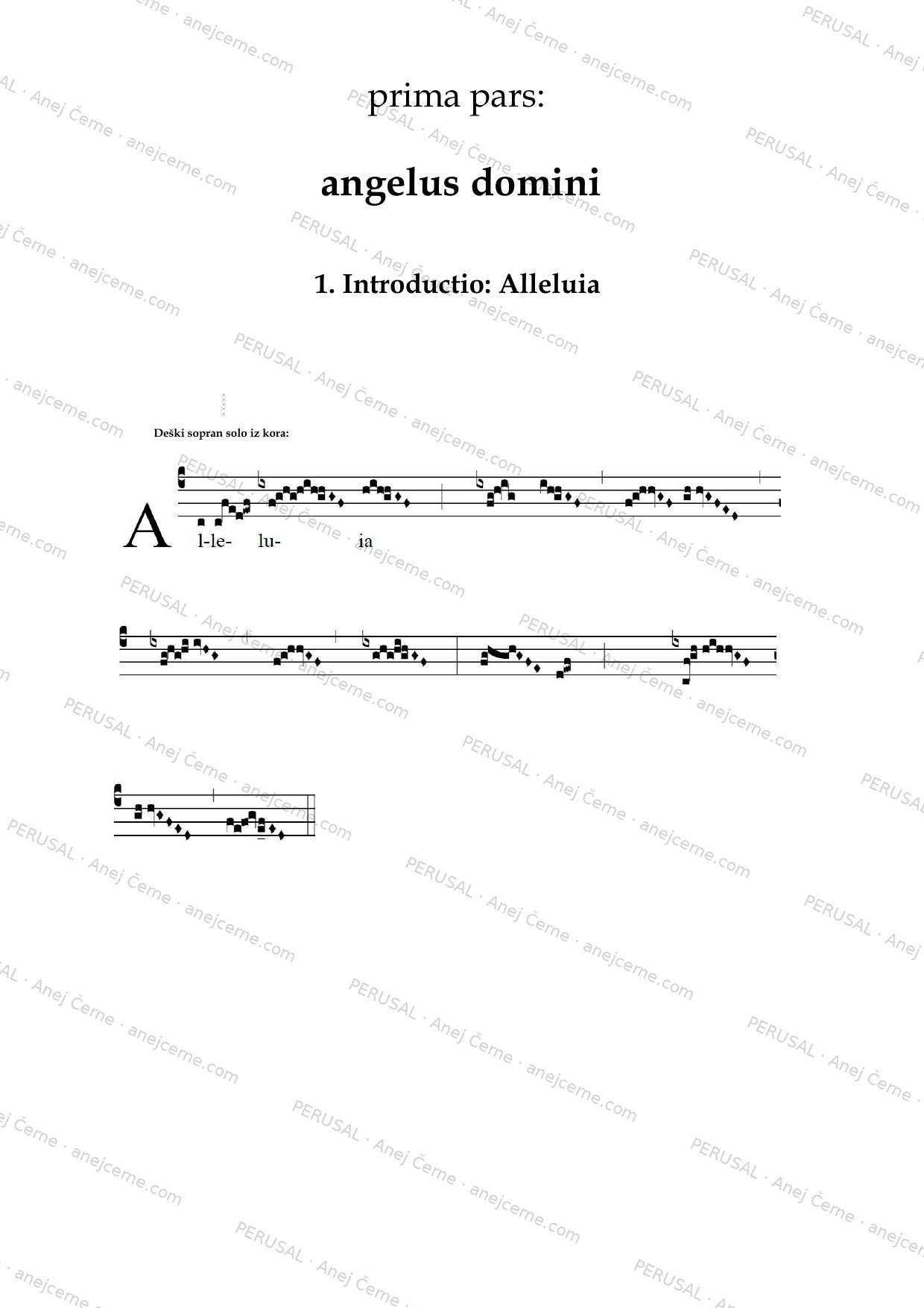
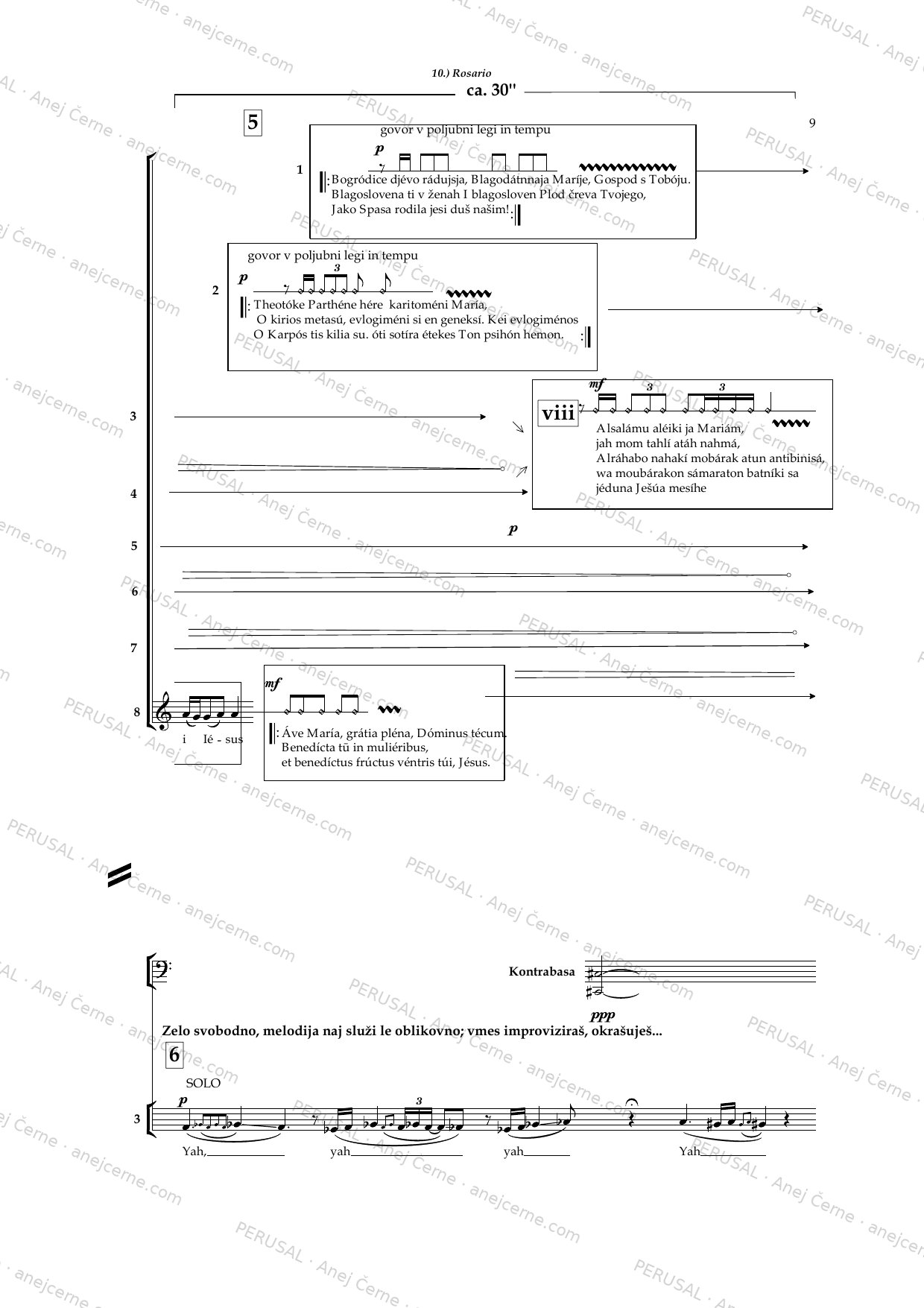
The piece consists of two parts that represent the life of Mary. The first, Angelus Domini, describes creation, conception and life itself. In times when being human is so highly relative a term, Mary herself bears the concept of divine reality of creation — the point of which is not that we were given a gift, but that we ourselves are a gift. Conception relies solely on acceptance — fiat mihi. And God is made flesh — not by the will of a man, but secundum verbum tuum.
The second part, O, vos omnes, is an address upon perceiving the essential. On the path we are taking, Mary's sorrow at her loss surpasses the pain of our daily struggles. Yet we are reassured: "Behold your Mother", and "Here are my Mother and my brothers. For whoever does the will of my Father in heaven is my brother and sister and mother." These words simultaneously assure us that all the faith and invisible ties that hold our lives together were not in vain — for the eternal enemy, death, has been conquered.
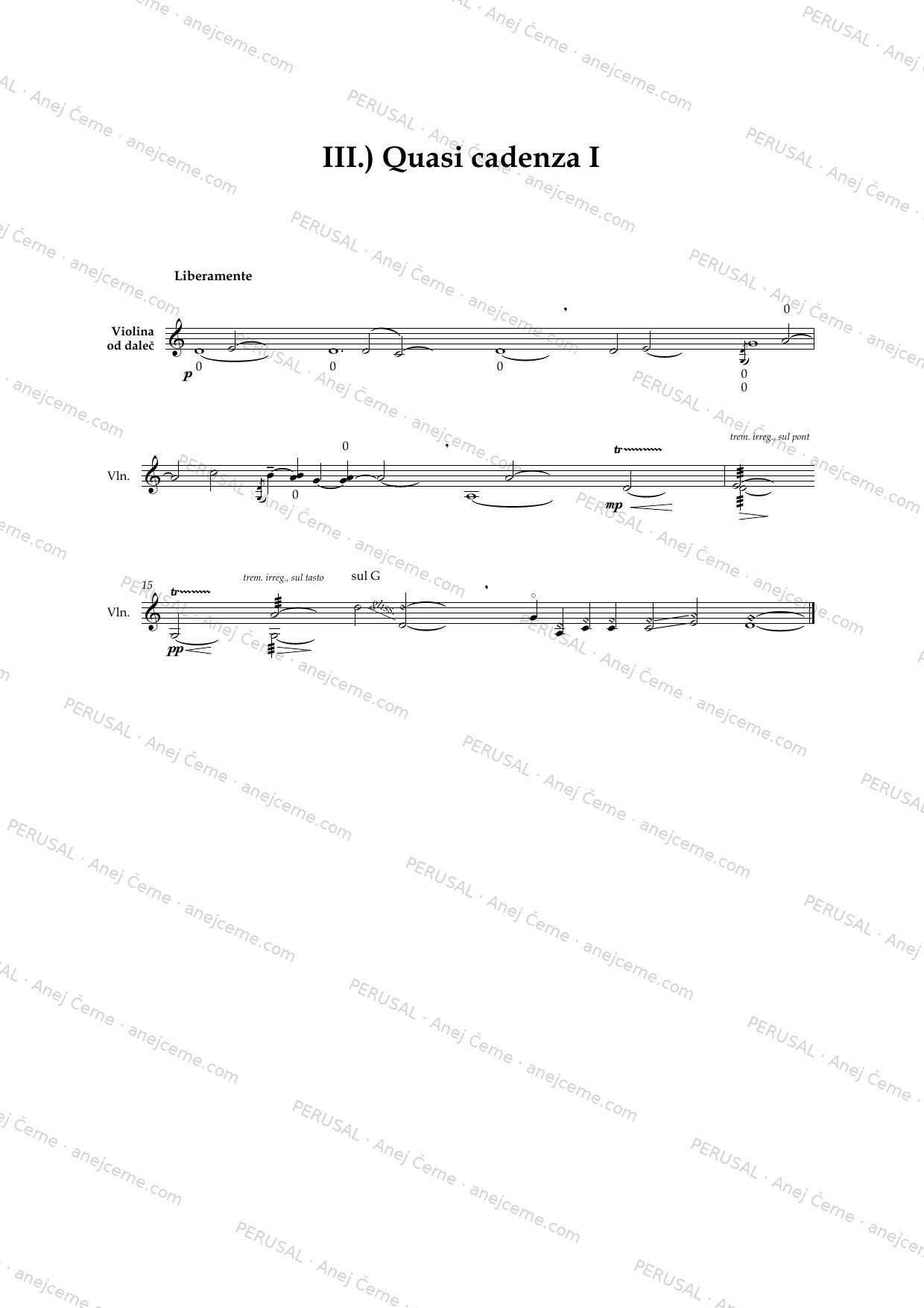
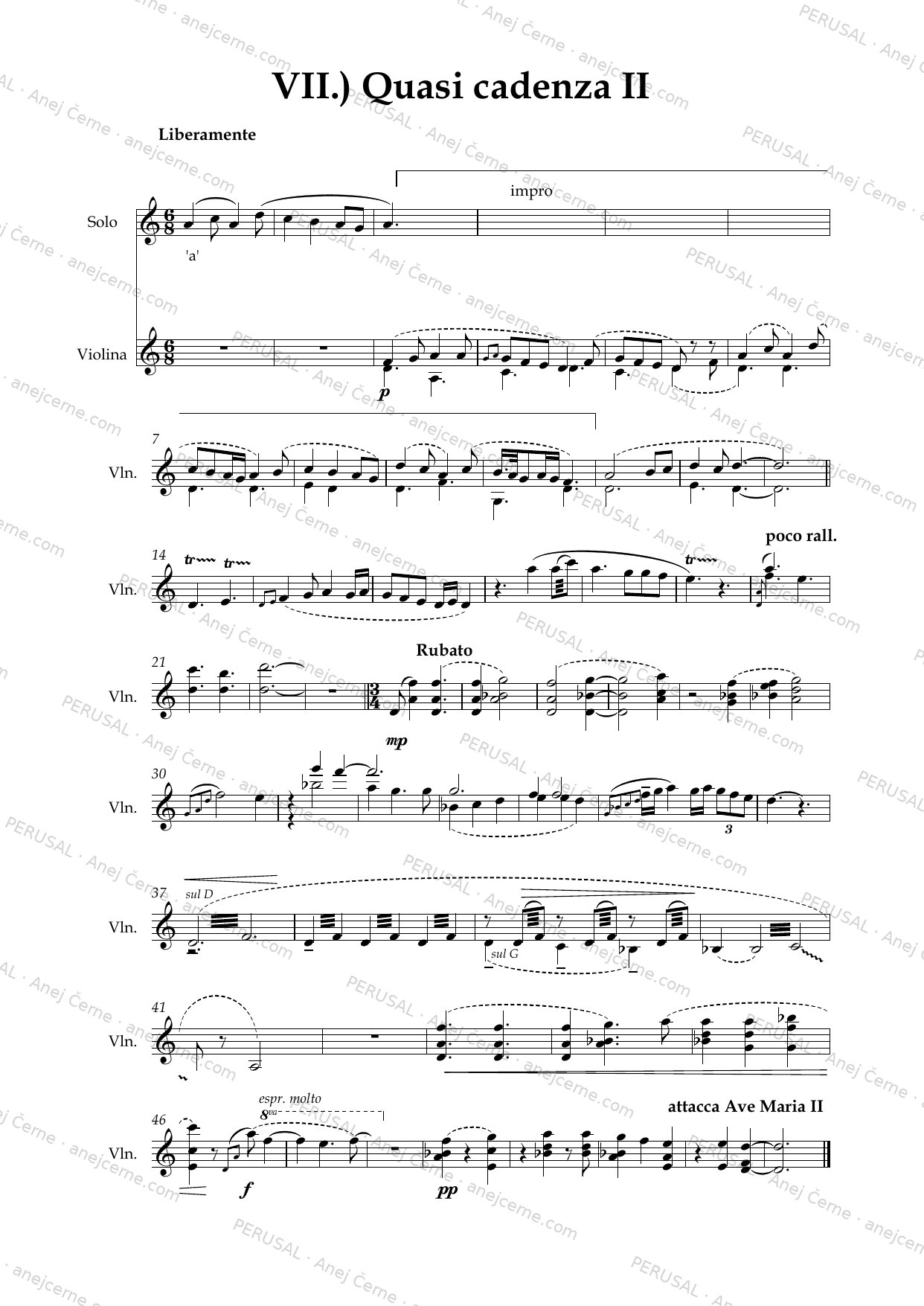
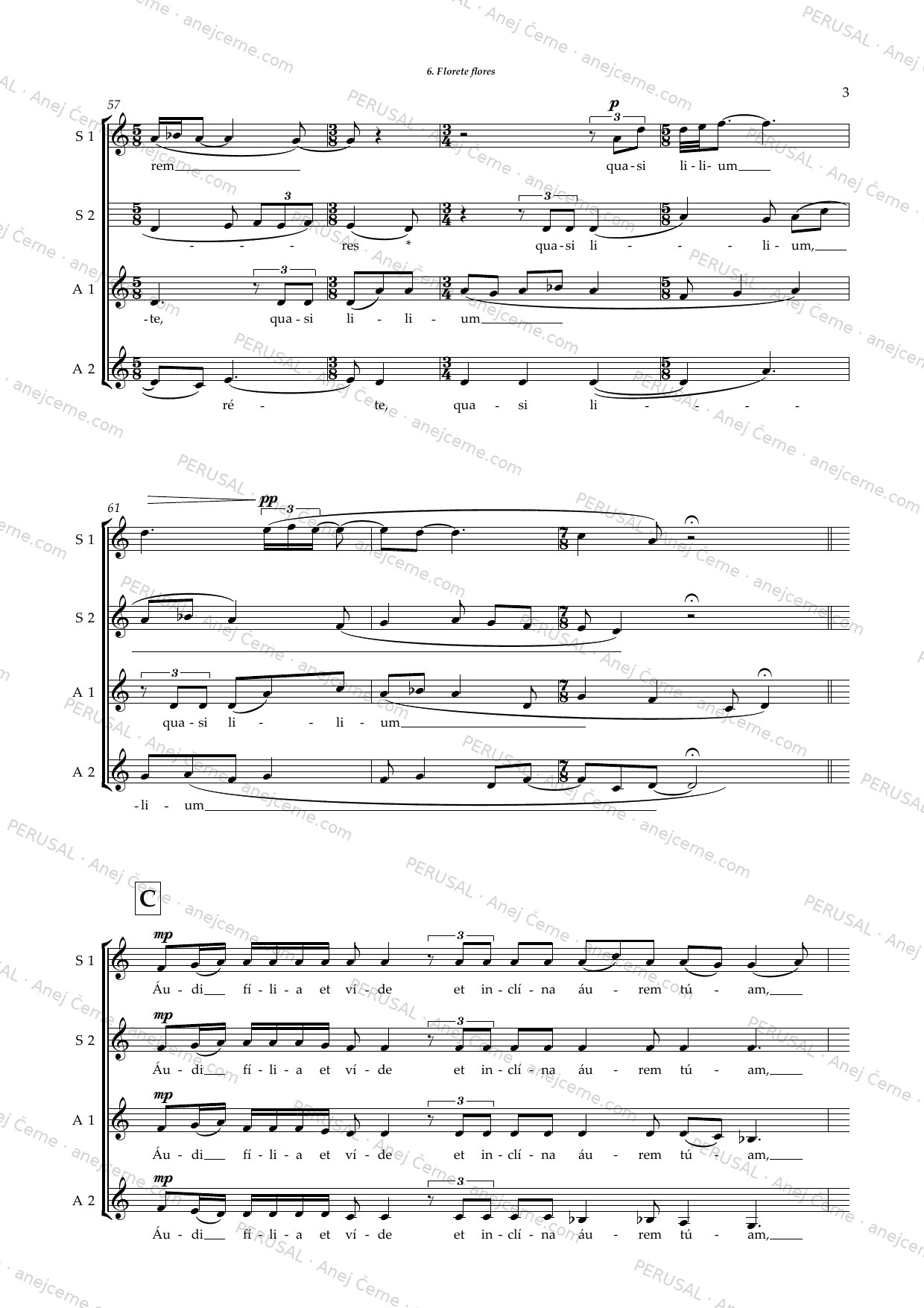
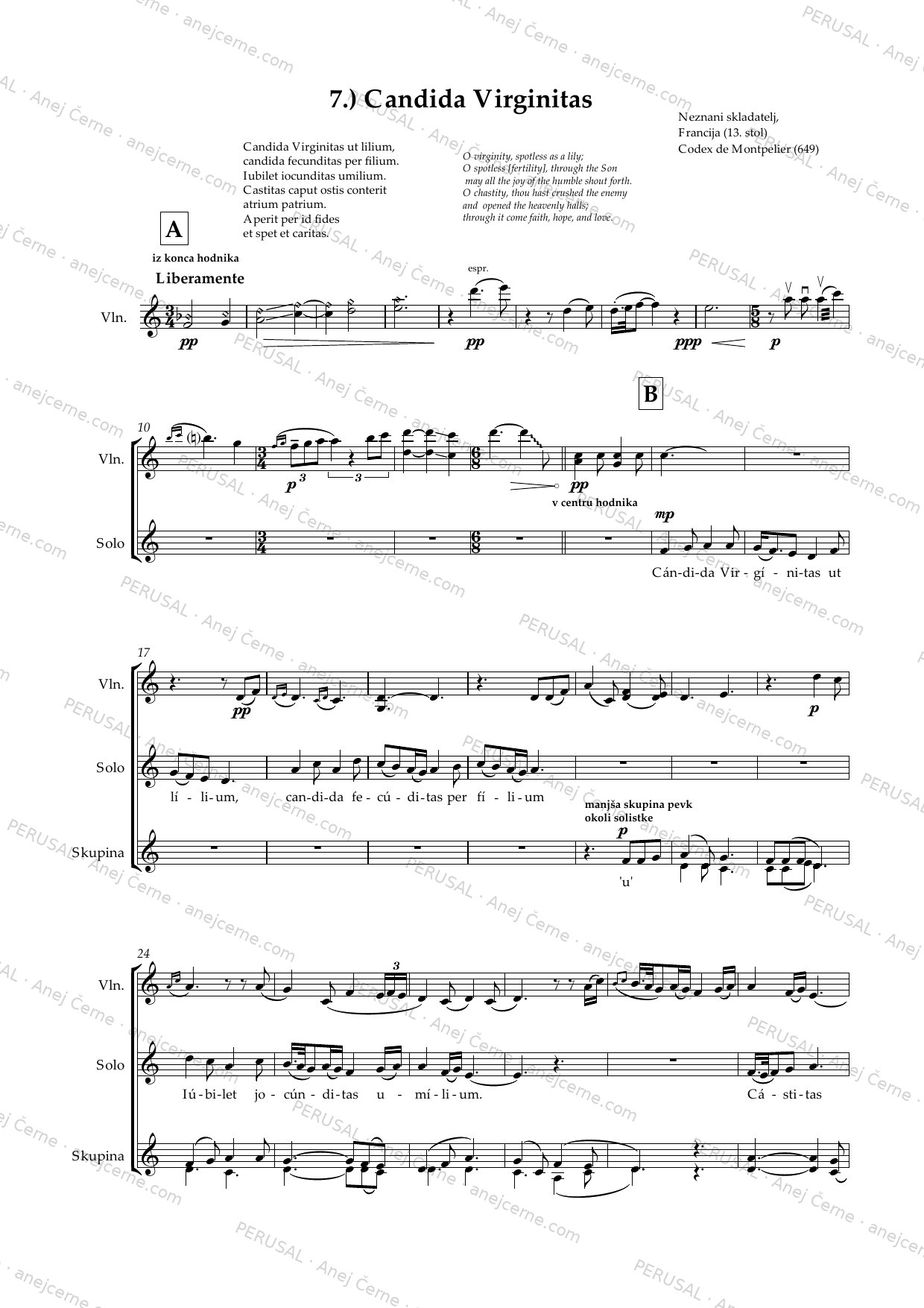
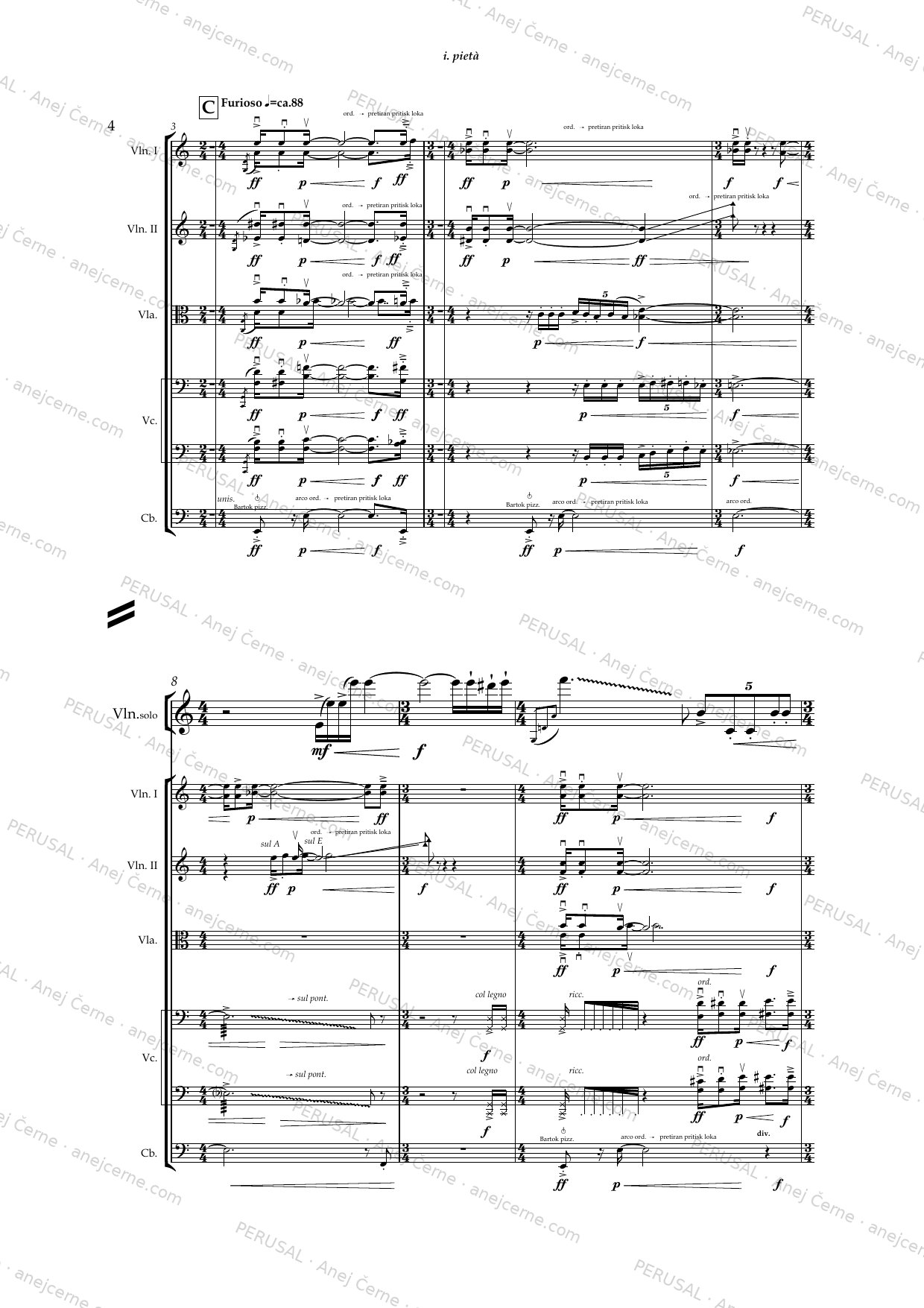
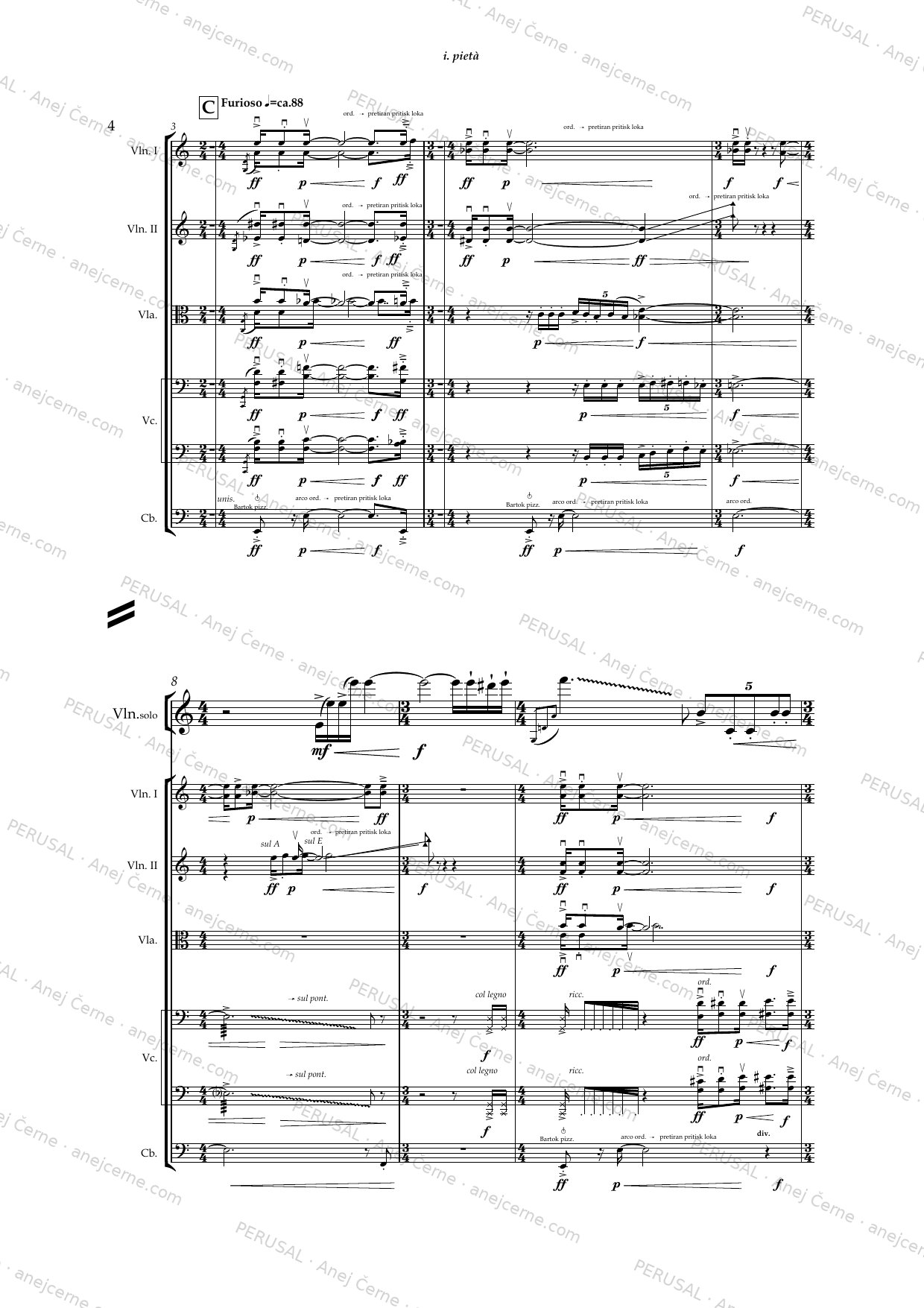
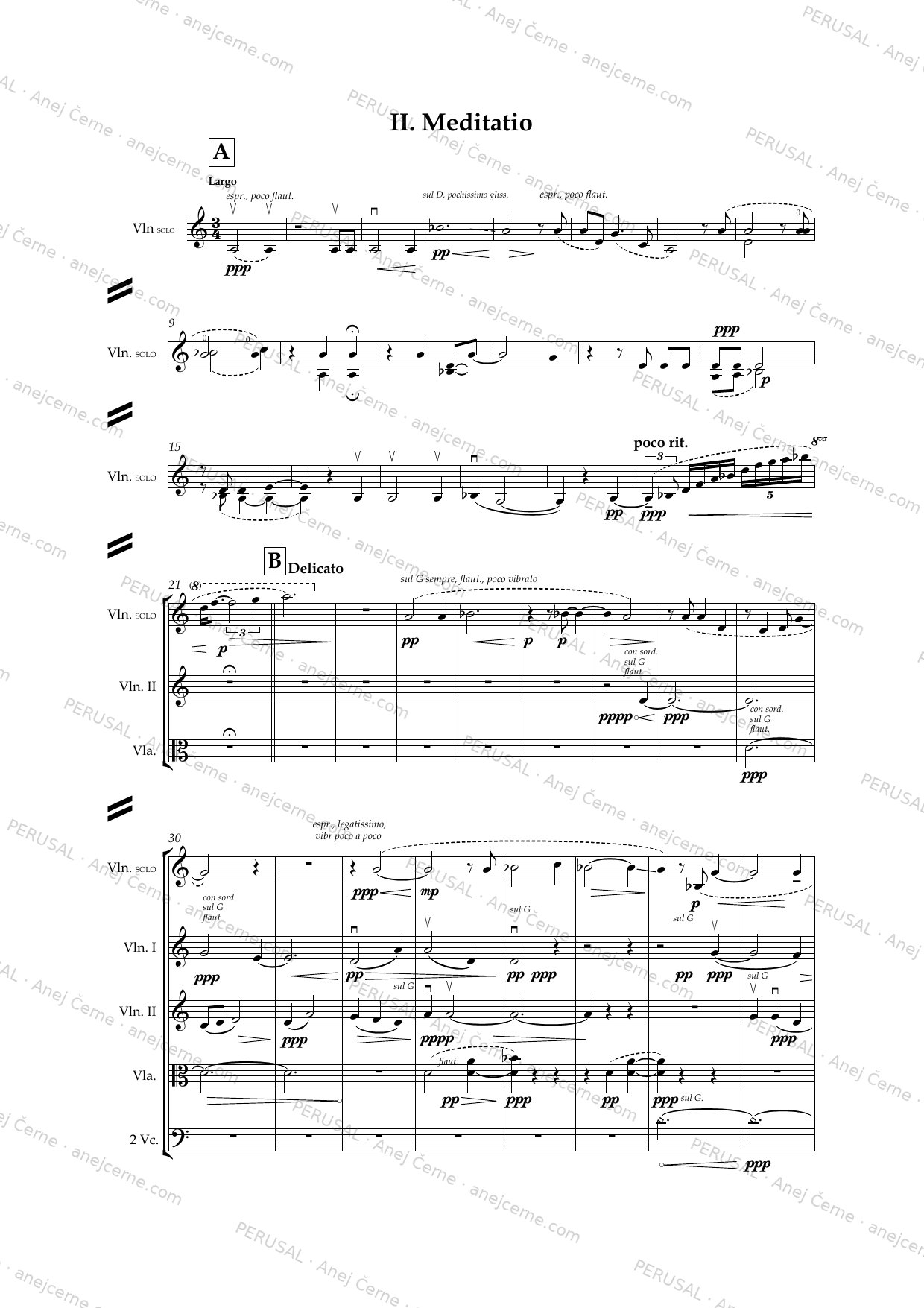
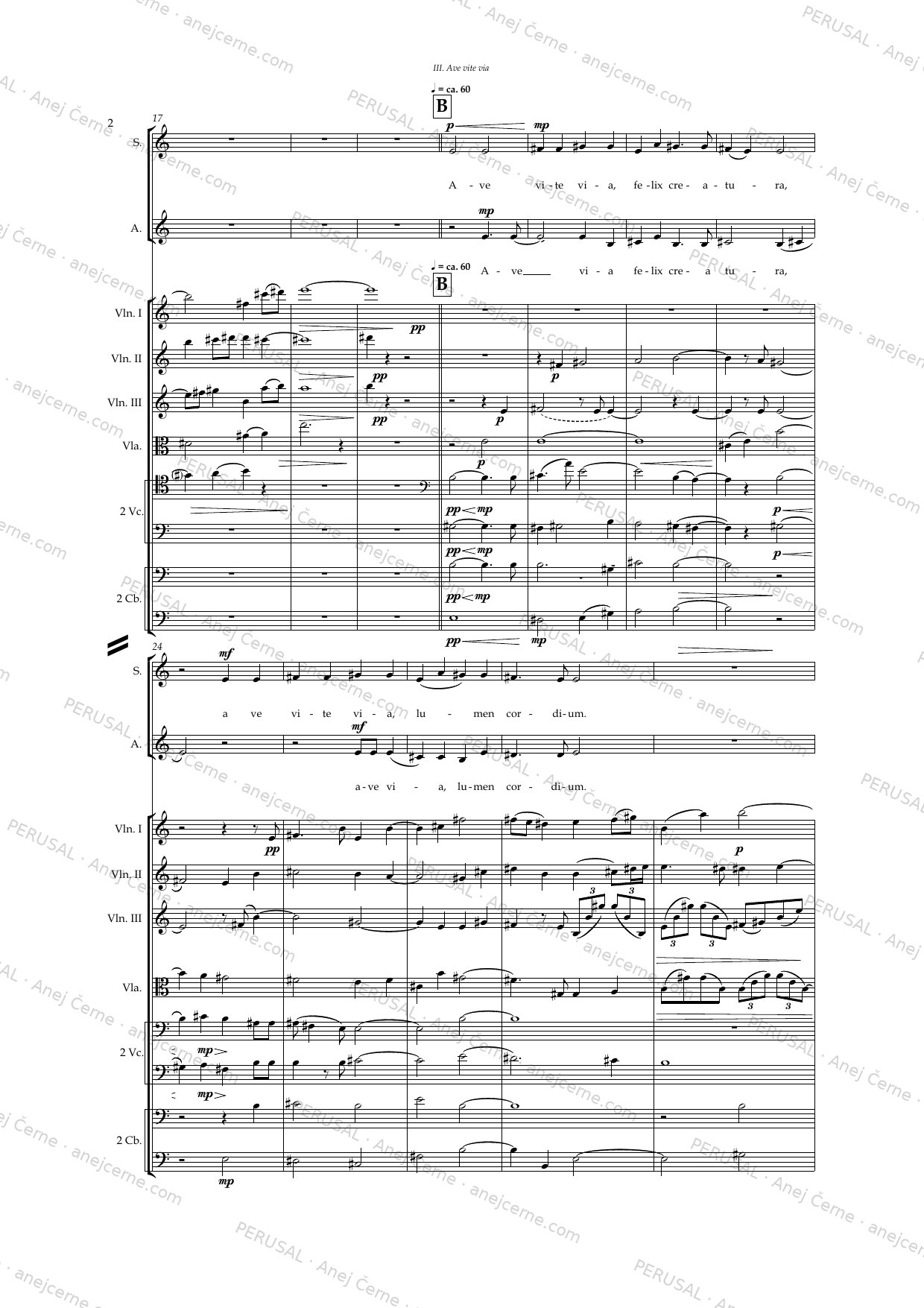
The sound world is shaped by three elements: vocal soloists and the choir, who represent the community and the invisible bonds between people; the solo violin, which represents the soul and connects the vocal lines with the strings; and the string ensemble, which conveys the dimension of time. The musical impulse of this work is the relationship between people I trust completely. It came into being organically — both in its creation and its performance.
Music has the power to connect people and to transform individual perceptions into a single message — meaning that every performer is at the same time also a creator, developing an energy that is both a part of him and an inseparable part of the community.— Anej Černe